
Hydroponics in the Modern Landscape
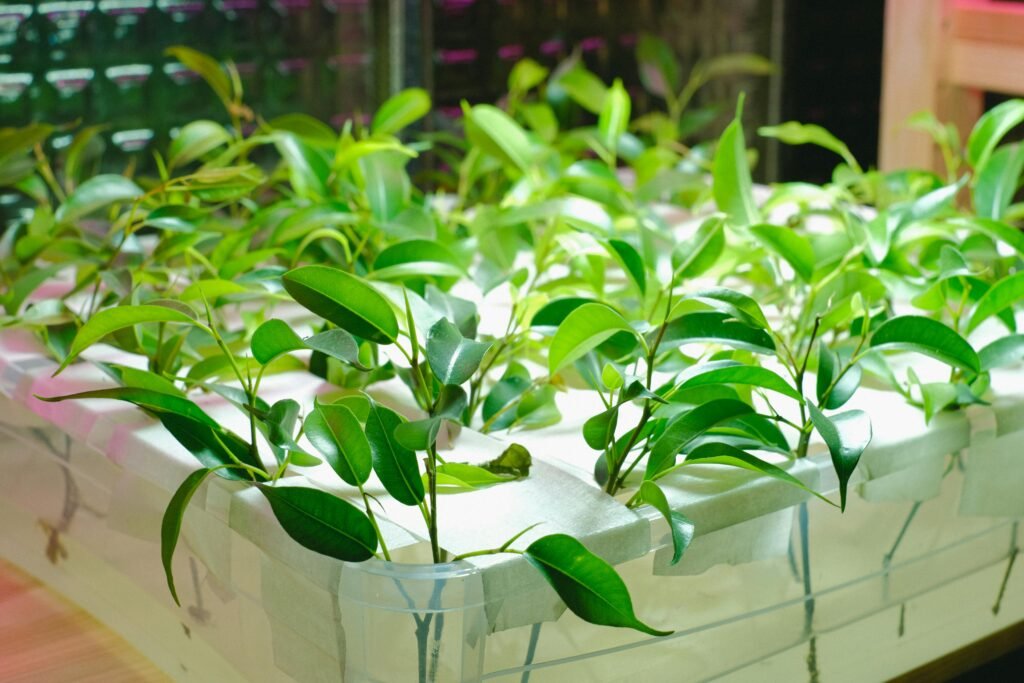
Hydroponics is about growing plants without soil, using a mineral-rich water as the main source of nutrients. Plant roots are supported by various inert medias, such as rockwool and coco peat.
The use of hydroponics is also commonly associated to use of artificial lighting, which allows plants to meet their lighting needs indoors.
Hydroponics provides the modern garderner with the ability to meet specific plant needs, through delicate control of water and lights.
A Brief History of Hydroponics
Hydroponics isn’t just a recent tech trend. Some point to the Hanging Gardens of Babylon as an ancient forerunner, though the details are a bit lost to time.
Fast forward to 1699, English physician John Woodward scientifically described the viability of growing plants in water. Some more time passed, and the official term “hydroponics” itself was only coined in 1929.
The concept has been evolving ever since. Nowadays, hydroponics systems show up frequently, from high-tech commercial farms to small-scale urban setups.
Practical Advantages of Hydroponics for Apartments
Why use hydroponics? There are several benefits you can utilise:
- Reduced Pest Risk: Without soil, you’re less likely to attract soil-dwelling pests indoors.
- Fewer Soil-Based Diseases: Plants in water are less prone to infections by soil-borne fungi.
- Immediate Nutrient Control: Nutrient imbalances can be corrected fast, through adjustments in the solution, without waiting for soil changes to kick in.
- Simplicity: One system works for many types of leafy crops, so you don’t need to buy and store a dozen different soil blends.
- Consistency: With precise control, you can expect regular harvests season after season.
In addition to functional advantages, hydroponics system provides several aesthetical uses:
- No dirt tracks around the apartment.
- No stockpile of soil bags or potting mixes at home.
- Harvesting become easy and clean, without digging.
Costs & Considerations of Hydroponic Systems
Despite the perks, hydroponics isn’t a one-size-fits-all solution:
- Higher Initial Costs: Setup can be pricier than buying pots and soil.
- Not Suitable for Every Plant: Plants such as larger fruit trees (like figs and citrus) or root vegetables (potatoes, yams) require larger spaces and specific soil conditions to flourish.
- Missing Soil Microbiome: Soil is home to a complex ecosystem of diversified microbes, and hydro systems lack this natural ecosystem. This can reduce plant resilience and increase their susceptibility to certain diseases.
- Learning Curve: You’ll need time to pick up the basics of watering, nutrition and light management.
Striking the Right Balance
Hydroponics is a powerful tool for modern edible gardening, especially when space and cleanliness matter. Leafy greens, tomatoes, and herbs thrive in these systems. However, this does not mean that Hydroponics is for everyone.
You can use this Digital Readiness Checklist to identify whether hydroponics is a good fit for you.
Many successful modern mix hydroponics and traditional soil gardening techniques for flexibility and variety. The bottom line? Stay open, experiment, and grow what works for you and your space.